


Introduction
In medical settings and nursing homes, hand hygiene and the proper reprocessing of medical instruments are crucial for ensuring the safety of patients and healthcare workers. As medical technology, including regenerative medicine, becomes more advanced, society is requiring that medical materials be selected based on multiple criteria, including efficacy, environmental compatibility, and biocompatibility.
In recent years, biosurfactants, namely, new materials that can be mass-produced by microorganisms using fermentation technology, have been drawing attention as next-generation surfactants to replace traditional petroleum-based synthetic surfactants. As fermentation products, biosurfactants are highly biodegradable. They also have low toxicity, a low environmental impact, and low flammability. None of these properties are found in traditional petroleum-based synthetic surfactants1.
In this article, the new sophorolipid (SOFORO), which is produced by fermentation using the yeast Starmerella bombicola, is introduced, with a focus on its use in healthcare settings.
New Material SOFORO
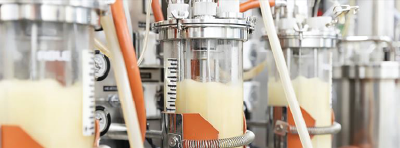
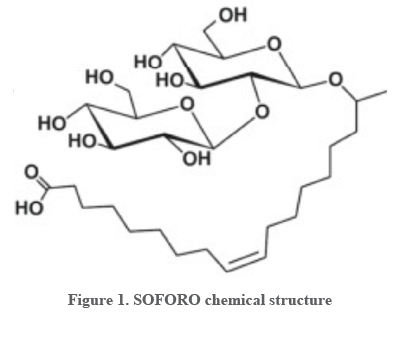
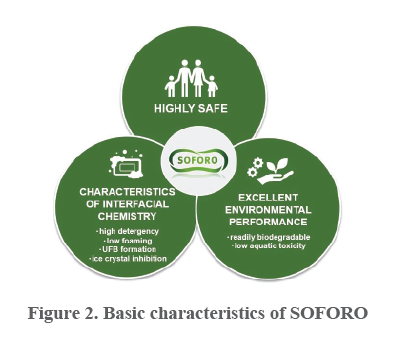
SOFORO is a glycolipid-type biosurfactant produced by the yeast Starmerella bombicola through the fermentation of sugar and vegetable oil (Figure 1). Similar to bioplastics and the like, SOFORO is positioned as a representative material that can replace petroleum-derived chemicals with bio-derived alternatives. This is in line with the Japanese government’s push for decarbonisation by transitioning away from fossil fuel dependence and industrial structure transformation centred on fermentation technology (Figure 2). Following the discovery of SOFORO in 1969, many researchers tried to find practical applications for this biosurfactant; however, none of these attempts were economically viable. A turning point came in 2001, when SOFORO was first commercialised as a detergent for household dishwashers. Its high cleaning performance and environmental compatibility were recognised, which led to its widespread adoption as a recommended product by major home appliance manufacturers2.
SOFORO boasts cleaning and emulsifying properties comparable to those of conventional petroleum-based surfactants while also being biodegradable and having low irritating effects. This new material thus enables the development of products where both people and the environment are taken into consideration (Figure 2). Its applications are now expanding beyond detergents to include cosmetics and food. SOFORO has numerous applications in the healthcare settings.
Reprocessing of Medical Devices
The quality of cleaning, disinfection, and sterilisation of medical devices in the central sterile supply departments of hospitals is extremely important in preventing hospital-acquired infections. When cleaning using a washer disinfector, the excessive foaming of conventional surfactants can hinder the physical cleaning process, which increases the risk of contaminant reattachment (recontamination).
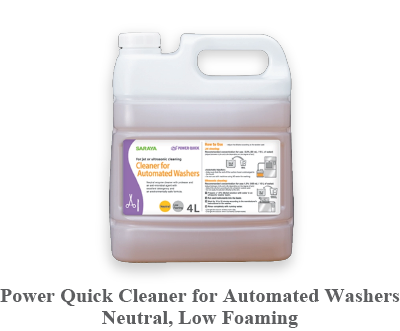
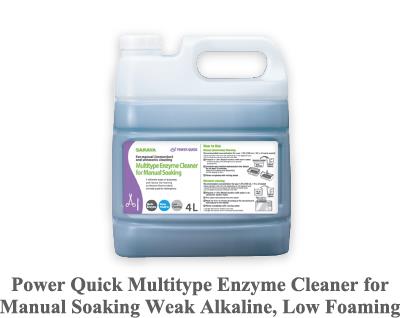
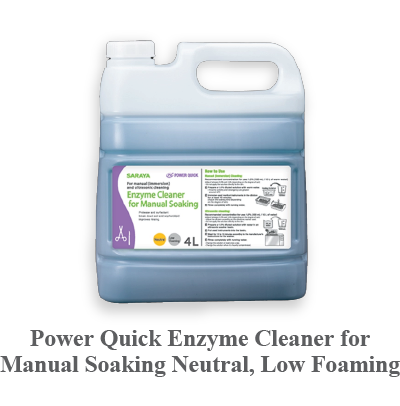
SOFORO is used in medical device detergents, such as the Power Quick series, because of its extremely rare low-foaming property. The foam formed by SOFORO-formulated detergents during the cleaning process is unstable and collapses immediately, thus fully utilising the physical cleaning power of the jet stream of the washer disinfector and promoting and accelerating contaminant removal. SOFORO-formulated detergents offer superior cleaning power and rinsability, making them effective for cleaning medical devices with complex structures. Low-foaming enzyme-based immersion detergents that incorporate SOFORO and are used in the pre-cleaning step prior to washer disinfector cleaning have been put to practical use. SOFORO’s high efficiency and excellent material compatibility with medical devices have led to its widespread use in medical device reprocessing in recent years.
 |
 |
 |
Hand Care (Hand Soap)
Establishing handwashing as a fundamental infection prevention habit requires products to have cleansing properties while being comfortable to use. Including SOFORO in the formulation improves the low-temperature stability and foaming ability of soap under hard water conditions. However, its low foaming property means it may compromise the foamability and creaminess of formulations like body washes. This issue was resolved by combining soap (fatty acid salt) with SOFORO in a specific ratio to achieve a fine, elastic, and soft foam that is gentle and pleasant on the hands. Furthermore, the addition of essential oils and other aromatic ingredients has been shown to significantly reduce multiple negative moods, including anger, hostility, tension, and anxiety. Incorporating SOFORO into hand soaps has been shown to enhance handwashing by not only controlling infection but also providing a relaxing effect for the mind and body.

Foot Care (Foot Care Sheet) and Skin Care
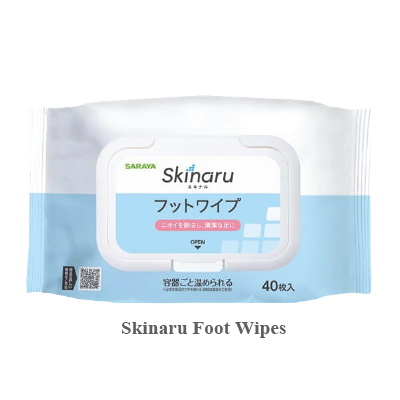
Our feet are the foundation of our bodies and support all our daily activities. They are prone to blood flow disorders and nerve damage, and even small wounds can lead to infection. Older adults, in particular, are at a high risk of experiencing skin problems, so it is important to monitor their foot health through daily foot care. Skinaru Foot Wipes, cleansing sheets formulated with SOFORO and the cationic antibacterial agent polyaminopropyl biguanide (PHMB), are mildly acidic and hypoallergenic and have been shown to have low cytotoxicity, which makes them safe for use even by older adults and people with diabetes who have fragile skin.
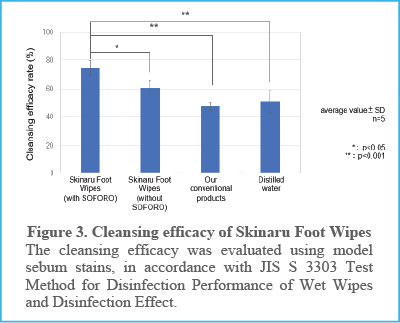
In a cleansing test using model sebum stains, Skinaru Foot Wipes demonstrated significantly higher cleansing efficiency rates than conventional products. Furthermore, the cleansing efficacy was significantly lower without SOFORO (Figure 3).
Aside from their high cleansing efficacy, cytotoxicity tests confirmed the low toxicity of the wipes with SOFORO, thus demonstrating their excellent safety. In a test using tinea fungus (Trichophyton mentagrophytes), SOFORO functioned as a carrier to promote PHMB penetration into the stratum corneum, leading to an enhanced antifungal effect. Wipe-off disinfection tests for tinea fungus showed that fewer bacteria remained compared to when our conventional product was used, thus demonstrating the high disinfecting performance of the wipes3. Because wipes with SOFORO can be used without water, it is suitable for situations where bathing is difficult, for home medical care and nursing, and as a disaster preparedness item. They can also be conveniently heated in a microwave or towel warmer before use. SOFORO is compatible with most wipe materials and has shown promising applications for delicate intimate zones, such as the perineal area, which have fragile skin structures.
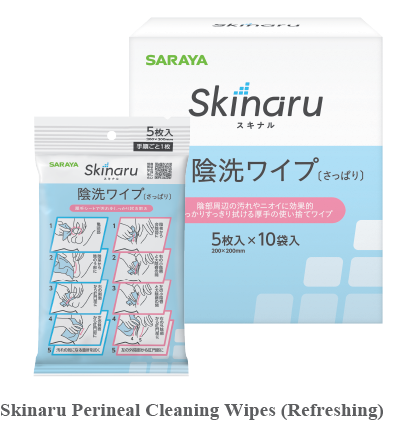
The perineal area, with its thin and easily macerated stratum corneum, is a vulnerable area of skin, which is susceptible to friction and other irritants. It is thus at risk of skin problems such as candidiasis, so it is important to maintain a clean environment. While liquid or foam-type cleansers are commonly used for perineal cleansing, the procedures associated with these cleansers are tedious and prone to inconsistencies. Furthermore, given the recent labour shortage, demand for wipes has increased. SOFORO has demonstrated high compatibility with wipe materials, which makes it suitable for use in perineal cleansing wipes used to clean the fragile skin of the perineal area.
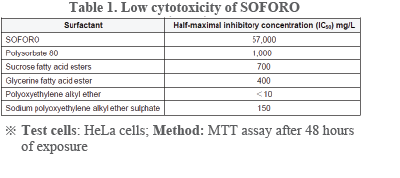
The results of a cytotoxicity test on the safety of SOFORO are shown in Table 14. SOFORO was confirmed to be more than 100 times less toxic than the commonly used surfactants polyoxyethylene alkyl ether and sodium polyoxyethylene alkyl ether sulphate and more than 50 times less toxic than polysorbate 80, which is also used in the formulations of injectables and the food additives sucrose fatty acid esters and glycerine fatty acid esters. Additionally, SOFORO is suitable for caring for fragile areas with a weakened skin barrier.
Wound Care
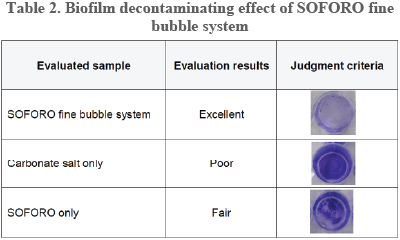
Nanobubbles are nano-sized bubbles less than 1 μm in size. Their microstructure allows them to remain stable in water without floating or bursting. They are highly functional, with excellent cleansing, penetration, and diffusion properties, which makes them suitable for a variety of applications. Previously, they were produced using high-speed vortex flow or pressurised dissolution methods, which required specialised equipment. However, a powder mixed with SOFORO and carbonates alone has been found to produce high-quality nanobubbles (SOFORO fine bubbles; 300 nm or less and a density of 1 billion bubbles/mL) simply by dissolving it in water. SOFORO fine bubbles have been shown to be effective in removing biofilms from wounds (Table 2). When their ability to remove simulated biofilms was examined, only the SOFORO fine bubble system consisting of SOFORO and carbonates demonstrated significant biofilm removal (Table 2).
Animal experiments demonstrated that SOFORO fine bubble cleansing can be used without adversely affecting wound healing and is effective in promoting the healing of critical colonisation wounds, a condition primarily caused by biofilms. It has been suggested that this promotion of healing may be achieved by SOFORO fine bubble cleansing through its inhibition of the deep infiltration of bacteria into wound tissue.
Regenerative Medicine
Regenerative medicine holds great promise as a life-saving technology to help overcome previously incurable diseases. To make regenerative medicine a reality, innovations in the peripheral technologies that support regenerative medicine are necessary. These include scaffolding materials for the proliferation of iPS cells and cryopreservation techniques that do not damage the proliferated cells. It has been discovered that SOFORO can cryopreserve cells in a high-quality state by altering the properties of water.
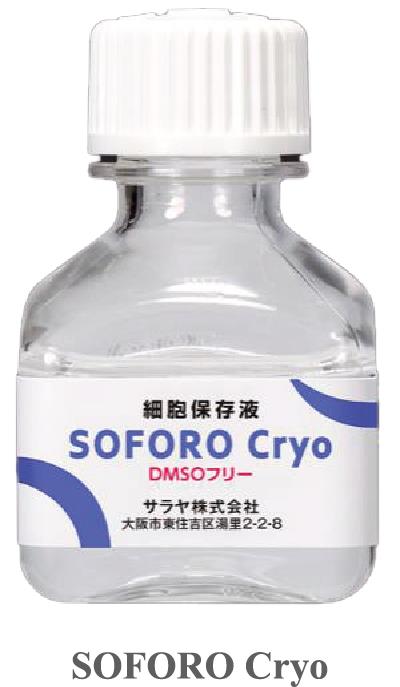
Dimethyl sulfoxide (DMSO) is a cryoprotectant used for cell cryopreservation. While highly effective, individual cells have unique characteristics, so DMSO-free cryopreservation solutions are also needed. SOFORO has been reported to suppress the formation of ice crystals during freezing with significantly smaller ice crystal sizes than those of DMSO5. Utilising this property, a DMSO-free cryopreservation solution (SOFORO Cryo) is commercially available as a research reagent Research and development are underway to enable clinical applications in the near future.
Conclusion
SOFORO is a highly safe glycolipid produced through fermentation technology. Its unique value extends beyond its role as a replacement for conventional petroleum-based surfactants, thus bringing unique value to the healthcare settings. Its range of applications, which continues to expand, currently includes low-foaming and high-cleaning performance in medical device reprocessing, low irritation and penetration enhancement in skin hygiene management, nanobubble technology in wound care, and DMSO-free cryopreservation in regenerative medicine. SOFORO plays an important role in Japan’s bioeconomy strategy as a material that combines environmental impact reduction with high functionality. Further research and implementation using this material is expected to help solve issues in the healthcare settings and to realise a more sustainable and safe society.
-
Publication Date:April 16, 2026
-
Category:IPC
HosCom International 2026 Vol. 1
