


Bathrooms at healthcare and nursing facilities are used by many people. Therefore, it tends to be moist for long periods of time, making it an environment conducive to the proliferation of gram-negative bacteria and mold1,2. Furthermore, dead skin cells and sebum washed away from the body may remain on the environmental surface, and this dirt and moisture may become a breeding ground for microorganisms. If these microorganisms enter through mucous membranes or wounds through contact or splashing water, they can cause infections in people with weak resistance, such as the elderly. There have been cases in nursing facilities where residents have died after being infected by bathwater contaminated with Legionella, a gram-negative bacteria3. In this opportunity, why don't you think about the bathroom hygiene and infection control?
Potential Infection Risk Areas
-
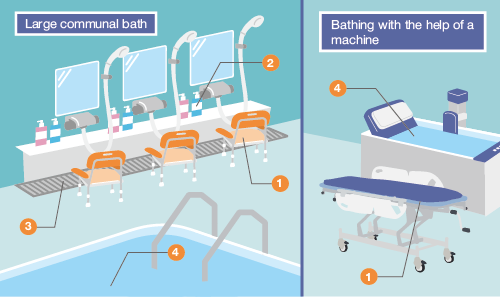
Shower stools and stretchers
The underside of a shower stool tends to stay wet, often overlooked in cleaning, and can easily harbour dirt and molds2. In addition, the sponge-like material often used in bath products such as shower stools, wheelchairs, and stretchers has a porous structure, making it difficult to clean and disinfect thoroughly, and prone to the proliferation of microorganisms1,2,4.
-
Body soap and shampoo
Adding liquid to the bottle may cause the growth of gram-negative bacteria.
-
Drains
Hair, soap scum, and dirt tend to accumulate in drains, and they are difficult to clean and dry. This situation is leading to the proliferation of microorganisms and odors2.
-
Bathtubs
Bathtubs with uneven surfaces or structures are difficult to clean and disinfect, and are prone to slime formation and the proliferation of Legionella4.
Hygiene and infection control methods
Here are some examples of hygiene and infection control methods for bathrooms. Please take into consideration the characteristics of the bathroom in your facility and carry out appropriate management.
Daily environmental maintenance
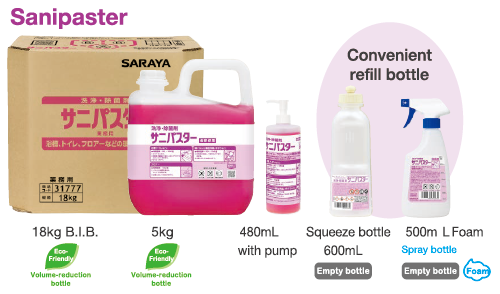
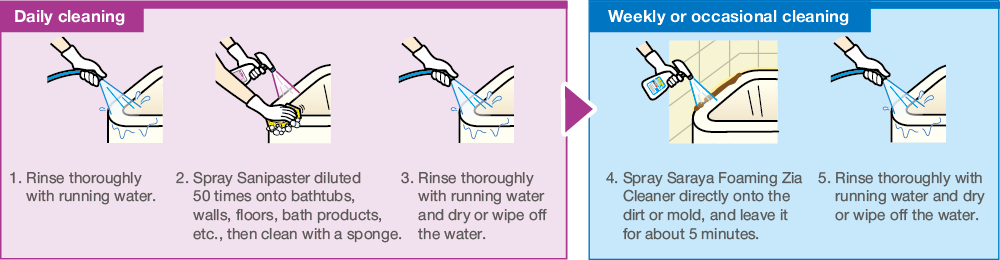
Clean the bathroom floors, walls, and other environmental surfaces every day using detergents and cleaning tools1,5,6. The fat components of soap react with the metal in tap water or sebum, and adhere to the environmental surfaces. The longer they are left, the harder they become to remove, so be sure to clean frequently2. To prevent the proliferation and establishment of microorganisms, be careful not to leave any slime behind when cleaning3,4,6. It has been reported that brush cleaning with detergents is effective for removing slime during daily cleaning4. Amphoteric surfactants that can be used for cleaning and disinfection are recommended2. When the last use of the day is completed, remove dirt from the drain and clean it1. Regular ventilation and drying of the bathroom are also important to prevent the proliferation of microorganisms. If ventilation is difficult, use a dry towel to wipe off the water after cleaning2.
Bathwater management
In Japan, bathwater is disinfected with chlorine-based chemicals, and the residual chlorine concentration in the bathwater is usually kept at about 0.4 mg/L3,5. The bathwater should always be kept full in a bathtub to allow overflowing hot water to wash away any floating debris on the surface. As a general rule, the bathwater should be drained, cleaned, and replaced every day after use.
Item management
Body soap and shampoo should be disposable. If refilled, the bottles should be washed and dried, and managed appropriately. Bath products such as shower stools/wheelchairs and stretchers should avoid sponge-like materials1,2, and after use, they should be washed, disinfected, and dried with a cleaning agent1. Keep the number of items in the bathroom to a minimum to allow undisturbed cleaning and drying2.
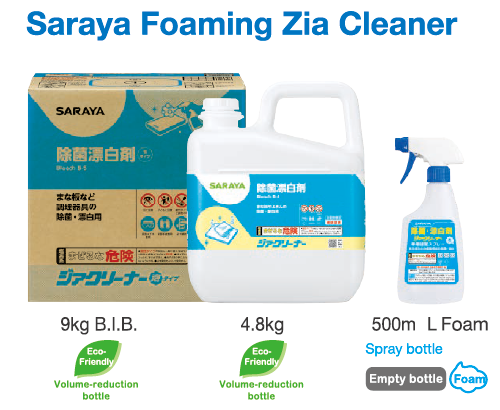
Beware of slimy "biofilms" in the bathroomBiofilm is a slimy substance formed when microorganisms and extracellular substances such as glycoproteins attach to solid surfaces7,8. The attached microorganisms begin to grow on the solid surface, forming microcolonies of several cells that grow further to form biofilms. The pink slimy substance in bathrooms and other wet areas is biofilm8,9,10. It is formed by bacteria such as Serratia, Methylobacterium, and yeast called Rhodotorula11,12. In addition, various microorganisms such as Legionella, Staphylococcus aureus, and Pseudomonas aeruginosa form biofilms8,10. Physical cleaning, such as brush cleaning, is said to be effective for cleaning and removing biofilms, and chemical cleaning using alkaline cleaning agents, especially sodium hypochlorite solution with high bactericidal efficacy, and surfactants, is also recommended9. |
For hygiene and infection control in the Bathroom
|
|
|
For daily bathroom Cleaning
|
For removing dirt and mold from the bathroom
|
Bathroom Cleaning Manual
Products
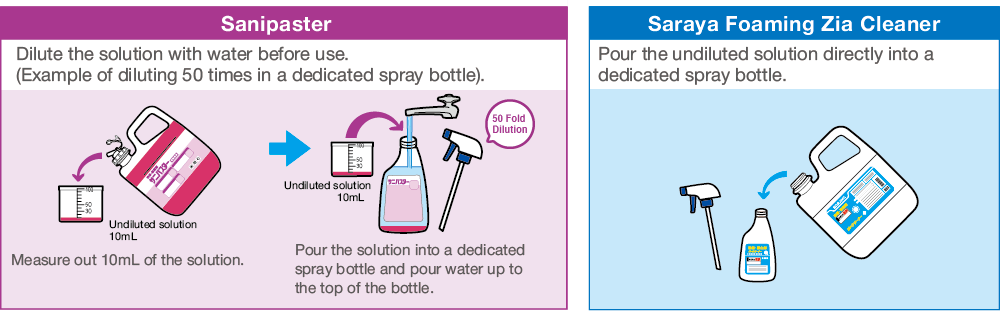
Cleaning Procedure

-
Publication Date:April 24, 2025
-
Category:IPC
HosCom International 2025 Vol. 1
