


Background
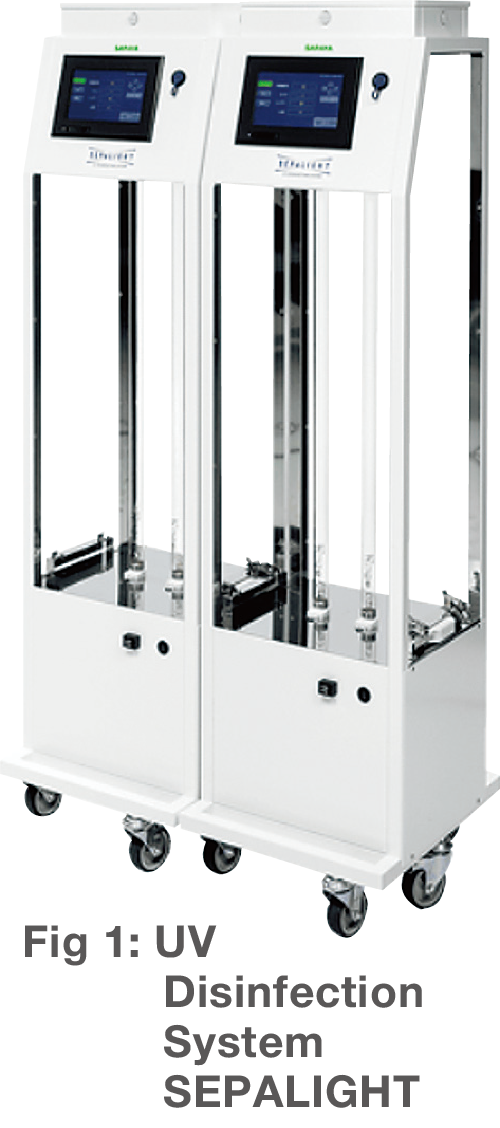
Approximately 400,000 to 600,000 nosocomial infections occur every year in Germany alonel. These figures illustrate that the prevention of nosocomial infections is enormously important when it comes to patient care in hospitals. The transmission of and infection with bacteria, fungi, viruses, and parasites can occur in various ways. In addition to hand and skin contact, contaminated surfaces or medical devices are also potential causes of transmission, as are contaminated drinking water and pathogens in the air. Efficient and reliably effective disinfection methods are key to the successful prevention of hospital-acquired infections, one example of which that damages microorganisms is irradiation with ultraviolet light (UV). The effectiveness of UV-C radiation in preventing microbial growth, in addition to eradicating and reducing the persistence of microorganisms, was first discovered in 1877 and has been described and proven many times since2,3. UV-C disinfection works by damaging the genetic material of microorganisms using high-energy and short-wavelength radiation of 254 nm, using, e.g., a low-pressure mercury lamp4. The further away the irradiated surface is from the light source, the less effective the disinfection and thus the damage to the potentially pathogenic agents5. Essentially, the irradiation time and intensity must be sufficient to achieve the desired result. However, microorganisms react with varying degrees of sensitivity to UV-C radiation6.
Effectiveness and benefits of disinfection using UV radiation and possible in-hospital uses
UV radiation can be used in hospitals to disinfect surfaces and indoor air, as well as in the treatment of drinking water and wastewater systems3. More specifically, UV-C disinfection has become an established method for the treatment and disinfection of drinking water7,8. One advantage of the UV disinfection of drinking water compared to chemical disinfection is that it does not alter the taste or odour of the water. Further, the microorganisms in the water do not build up resistance to UV radiation. Meanwhile, UV-C radiation is also used as a disinfection method in dialysis water or in the wetted parts of dialysis machines. Concerning whether to apply UV disinfection to central air handling units or mobile air purifiers, there are certain factors that must be carefully considered to achieve the desired disinfection performance: the specific parameters of the room size, irradiation intensity, flow velocity, and, above all, the dwell time of the air. UV disinfection of the air has not yet become established in the hospital sector, compared to filtration via HEPA filters. Yet, the use of UV-C rays to disinfect surfaces has become more important. Highenergy UV-C radiation not only damages potentially pathogenic germs, but exposure to UV-C radiation can also be harmful to humans, causing considerable damage to the eyes and skin. All UV rays have been classified as carcinogenic9; for this reason, UV disinfection processes may only be conducted if human exposure can be eliminated. One study showed a significant reduction in the number of germs on computer keyboards in patient rooms following UV-C irradiation10. Other studies report positive effects associated with disinfectants and UV use, showing a reduction in the incidences of Clostridioides difficile and vancomycin-resistant Enterococci (VRE)ll ,12. In some hospitals, autonomous UV disinfection robots are used to disinfect surfaces.
Practical use of UV surface disinfection in hospitals
Some especially important factors for ensuring successful disinfection include correct exposure times and radiation intensity, in addition to the deep cleaning process required beforehand13. Troublesome 'shadow-forming' objects may prevent the disinfection of surfaces behind them. The varying exposure times for different microorganisms render it difficult to generalise about duration and intensity. Manufacturers specify periods between 10 and 20 minutes per room for complete disinfection.
Controlled studies on the prevention of nosocomial infections are not yet available. A UV-C system used in Switzerland as one measure for containing an outbreak of VRE was shown to have likely helped end the outbreak5. However, it is not possible to evaluate the individual impact of UV irradiation when it is one of many hygiene measures. UV disinfection robots are always an extra measure, adopted in addition to standard room reprocessing, and they require a small number of personnel to perform the disinfection procedure. In addition, the layout of rooms must be recorded, or 'learned', prior to commissioning, and this process must be repeated after repositioning furniture, etc. The robot can only operate fully autonomously if the paths to the sites of operation are completely barrier-free. As such, safety features must be in place when using the robot to prevent human exposure12. UV disinfection robots are particularly useful in sensitive areas, such as intensive care units, operating rooms, and canteens/ kitchens. A field study in a dialysis unit showed that it is important to implement a cleaning step before UV application for disinfection to ensure a similar outcome as standard disinfection with an impregnated wipel3. In response, some criteria must be considered when selecting a suitable location and the desired effect when using a UV device. These criteria include accessibility to the location, time windows during which the room will be unoccupied, the provision of additional safety measures if someone enters the room, positioning in the room or in the ventilation system, and an indication of the rooms in which UV-C disinfection would be most effective. Before disinfecting with UV-C radiation, physical cleaning measures must be conducted to remove any dirt and debris, so the microorganisms are exposed and can be reached by the UV rays. As an additional safety measure for surfaces in extremely sensitive areas, such as intensive care units and surgeries where it is particularly important to minimise the number of germs, or when disinfecting water or air, UV disinfection can help to reduce germs and therefore prevent infection. As yet, there is little research on the effects of radiation on materials exposed to UV-C radiation when disinfecting surfaces. It is therefore not yet possible to determine whether frequent treatment with UV radiation causes faster wear and tear on surfaces.
Summary and key factors for successful use of UV radiation in hospitals
In conclusion, it can be said that in some high-risk areas, such as the dialysis unit, UV disinfection methods have already been in use for years; yet, there are no recommendations or guidelines from national or international agencies or medical associations regarding the use of UV disinfection as the sole method for preventing the transmission of infectious diseases. Although the efficacy of the method in damaging microorganisms is undisputed, there are still few findings or studies providing evidence that the method reduces hospitalacquired infections, especially compared with other established methods of cleaning and disinfection. It should also be noted that the durability of UV lamps and the relevant maintenance and servicing cycles would need to be considered. Before a decision is made to invest in a UV-C system, it is important to define its exact purpose and desired benefit, as well as how it relates to the other infection prevention measures in place. Ask yourself the following questions: Where and when would the machine be used? Which rooms would be available for the disinfection process and when? Isolation rooms? Intensive care units? Surgeries? What other benefits am I expecting from this system with regard to improving infection prevention? Will this system help me conserve resources and, therefore, possibly relieve the pressure on some departments? How will the introduction of a new form of technology affect the motivation of the staff who will be responsible for its operation? What documents/validation data am I expecting from the manufacturer, such as proof of efficacy, for example, pursuant to DIN EN 17272 (see HosCom 2024 vol.21 no.2) or field studies from other hospitals/departments? What does the manufacturer recommend for validation in the field? Is there support or training available for validation? Who will be responsible for the machine when it comes to validating its efficacy, maintenance, servicing, storage, and updating the programmed rooms and spaces? What costs will be incurred in the operation of the machine, and who will bear them? Who will be responsible for using the machine? It is important to clarify whether the use of the machine will be organised by staff from the cleaning team, the hygiene department, or the ward, and which of these departments will be responsible for operating it. Sufficient resources must then be made available to these departments, and staff must be trained accordingly3.
-
Publication Date:April 24, 2025
-
Category:Environmental Management
HosCom International 2025 Vol. 1
